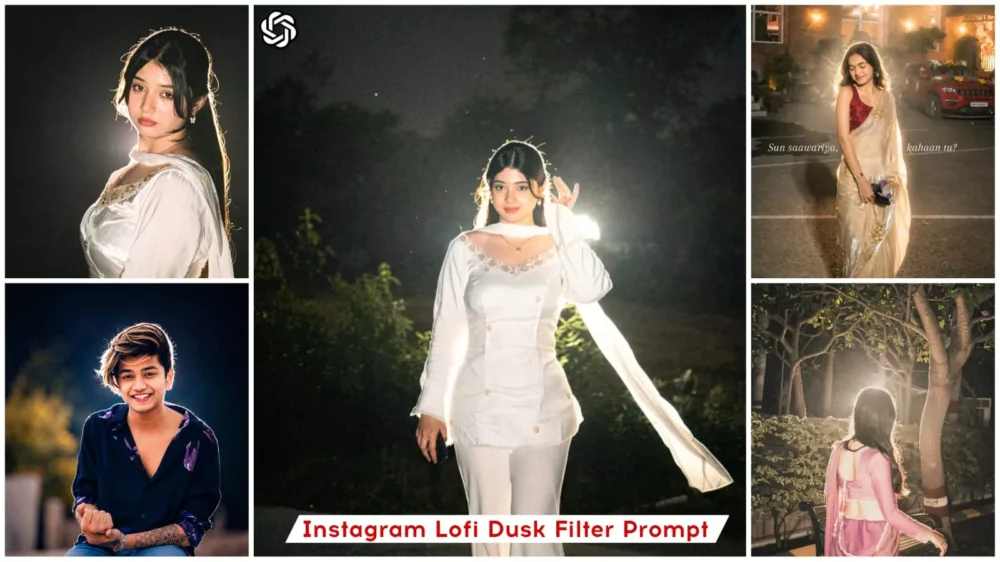
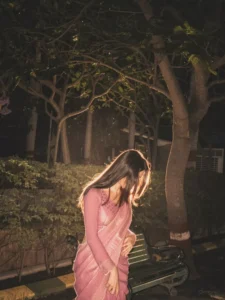
Lofi Dusk Filter Ai Photo Editing Prompts – Currently, a specific type of static photo is going viral rapidly across social media platforms—be it Instagram, Pinterest, or any other site. These images utilize a specific Instagram filter known as the “Lo-Fi Dusk” filter. This filter transforms ordinary photographs into soft, glowing images, lending them a distinctly dreamy and cinematic quality. It has garnered such immense popularity because, when this unique lighting effect is applied to a standard photograph, the result looks truly spectacular. Consequently, people are widely using these types of images—particularly for Instagram posts, profile pictures (DPs), aesthetic Reels, and various other purposes. The most remarkable feature of this filter is its ability to instantly infuse your photos with a radiant glow; it can even transform a daytime photograph into a stunning, atmospheric night-time image. We have shared various prompts tailored to different types of photographs; you can utilize these prompts to create a diverse range of unique images of your own.
Details Of Instagram Lofi Dusk Filter Ai Photo Editing Prompts
Ultimately, this is a filter that showcases an AI-driven photo editing style, characterized by soft lighting applied to the image. It enhances your skin with a glowing effect and features a dark background. This editing style frequently utilizes a specific color palette for the sky—one might describe it as adding a distinctly emotional, cinematic, and dreamy quality to the image. If we take a standard photograph and wish to transform it using this specific aesthetic, we typically have two options: apply a filter directly via Instagram, or utilize AI tools. However—given that many users are currently unable to locate this specific filter on Instagram—we will opt for the AI method, allowing us to convert the image into this distinct style simply by using a text prompt.
Why Is This Trend Going So Viral?
Look, while this filter is available on Instagram, it isn’t accessible to a large number of users. Consequently, many people are struggling to figure out how to create photos in this style and are actively searching for alternative solutions. However, there is absolutely no need for you to worry about that, as I have compiled and included the very best options right here—allowing you to generate your own photos simply by entering a text prompt. Furthermore, this trend embodies a dreamy and aesthetic vibe—a style of photography that is currently resonating deeply with a vast audience. AI has truly simplified this entire process; whereas previously we had to check various accounts just to see if a specific filter effect was available to us, now you can achieve the same result effortlessly—and instantly—by simply using a text prompt.
What Is The Most Distinctive Feature Of This Filter?
How can you identify it? Let me explain. First, understand that in any photo you apply it to, a “rim light” will be created around your body. Rim lighting occurs when light is directed from behind, causing small highlights to appear along the contours of your body. In addition to this, you will observe a glowing effect—specifically a white glow—surrounding your body. Furthermore, you will notice a blue-toned aesthetic, reminiscent of the lighting found during sunsets or at night. The overall vibe will be distinctly retro, with your background appearing completely dark. You will also see a cinematic blue tint. If you observe all these elements in a photograph, you can safely assume that the edit was created using the “Lo-Fi Dusk” filter.
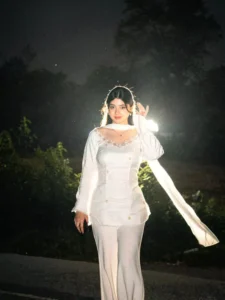
Create a dark moody nighttime atmosphere with a deep muted background fading into near-black shadows. Add a powerful glowing backlight directly behind the subject, creating an intense white rim light around the hair, shoulders, arms, and full body outline.Add a soft luminous aura surrounding the entire body, especially around the edges of the clothes, hair, hands, and legs, creating a dreamy glowing silhouette effect like cinematic night-flash photography. The glow should feel natural and atmospheric, not fantasy or neon. Include soft bloom diffusion, light bleeding, halation, and subtle mist around bright areas to create that glowing body effect.Combine this with subtle direct front flash lighting for a realistic DSLR flash aesthetic. Use high contrast cinematic lighting with warm peachy skin tones, soft highlights, deep shadows, slight overexposed glow on white clothing, and realistic low-light ambience.Add authentic vintage digital-camera texture: visible fine film grain, low-light sensor noise, faded blacks, muted dark tones, soft contrast, slight haze, and nostalgic Y2K lo-fi mood.Background should remain blurry, dark, and atmospheric with faint silhouettes, soft bokeh lights, and ambient dusk/night tones. Keep the image ultra realistic and cinematic, like an editorial night portrait captured on an 85mm DSLR lens with flash photography.Style keywords: glowing body aura, cinematic rim light, bloom glow, halation effect, soft flash diffusion, dreamy silhouette glow, Instagram Lofi Dusk filter, CCD camera aesthetic, disposable camera flash, grainy night portrait, moody dusk tones, realistic skin texture, shallow depth of field, photorealistic, ultra detailed, 4K.
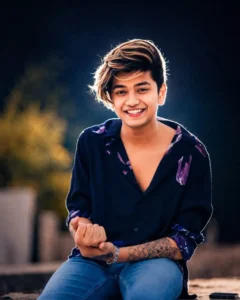
Relight image. Background: Deep and muted, darker tone at the top, grainy. Lighting: Bold night-flash aesthetic combining natural light with direct front-facing flash. Tiny highlights. Strong backlighting creating a brilliant white rim light around the subject, with a soft fill light from the front. Cinematic high-contrast mood. Skin rendered with gentle peachy tones.
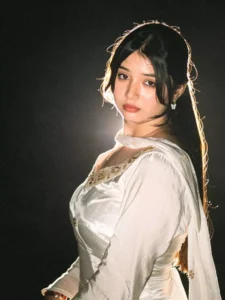
Transform the uploaded image into a cinematic “Lofi Dusk” Instagram aesthetic portrait. Preserve the exact same real person, face, hairstyle, skin tone, outfit, body proportions, pose, expression, and accessories with full identity accuracy.Create a dark moody nighttime atmosphere with a deep muted background fading into near-black shadows. Add a strong glowing backlight directly behind the subject, creating a bright white rim light around the hair, shoulders, and body edges. Combine this with subtle direct front flash lighting for a realistic DSLR flash effect.Use high contrast cinematic lighting with soft peachy skin tones, warm highlights, deep shadows, slight overexposed glow around bright areas, and realistic low-light ambience. Add soft bloom, halation, tiny specular highlights on skin, subtle lens flare, and atmospheric haze.Apply authentic vintage digital-camera texture: fine film grain, soft noise, low-light sensor grain, slight chromatic softness, muted blacks, faded dark tones, and nostalgic early-2000s lo-fi mood.Background should remain dark, blurry, and atmospheric with soft bokeh lights and faint silhouettes, giving a dreamy dusk/night vibe. Keep the image ultra realistic and cinematic, like an editorial flash photograph shot on an 85mm DSLR lens at night.Style keywords: Instagram Lofi Dusk filter, cinematic flash photography, night portrait, grainy aesthetic, soft bloom, rim light glow, analog digital camera texture, moody dusk tones, realistic skin texture, shallow depth of field, high contrast, low-light photography, premium Instagram aesthetic, photorealistic, ultra detailed, 4K.
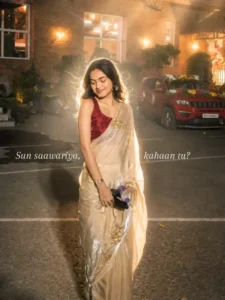
Apply an ethereal lighting filter to photo while fully preserving every original detail of the photo unchanged except for lighting, glow, and color mood. Add diffused sunbeams striking the subject’s skin, creating a glowing highlight on cheekbones, nose bridge, lips, and hair strands. Maintain clear separation between bright sunlit areas and soft, deep shadows to create a cinematic high-contrast mood. Inject subtle lens bloom, light haze, and a thin layer of atmospheric glow around the face and shoulders. Render skin with luminous translucency and gentle peachy tones. Enhance stray hair strands backlit by sunlight. Color-grade with slightly lowered saturation, and gentle film-like grain. Keep the overall background intact but allow sunlight flares and soft bokeh to wrap naturally around the subject. The result should look like a soft, ethereal daydream—sunlit, delicate, and cinematic.
Use the exact person, face, hairstyle, skin tone, facial structure, body proportions, expression, and clothing from the reference image without changing anything. The final image must fully preserve the real identity of the person who uploads the photo. Keep the same hair, beard, eyes, lips, jawline, skin texture, pose style, accessories, and outfit exactly as they appear in the original image.Do not replace or redesign the clothes. Keep the exact same outfit from the uploaded photo with identical colors, fabric texture, folds, fit, branding, and styling. The image should feel like the same real person captured in a cinematic professional photoshoot, not a different model.Apply only a cinematic visual effect and enhanced photography aesthetics while preserving complete realism and identity accuracy. Create a dramatic nighttime portrait with white backlighting behind the subject, producing a glowing white rim light around the hair and shoulders. Use moody cinematic lighting, soft shadows, realistic skin texture, shallow depth of field, subtle film grain, and natural color grading.Background should be dark and atmospheric with soft blurred crowd silhouettes and ambient lights, giving a concert or live-event vibe. Keep the pose natural, relaxed, and candid. The person should look authentic and realistic, exactly matching the uploaded reference photo.Photography style: ultra-realistic DSLR portrait, 85mm lens, cinematic framing, realistic skin pores, high contrast lighting, premium Instagram aesthetic, editorial fashion photography, photorealistic, ultra detailed, 4K quality.
Why is this trend going so viral on Instagram?
The reason for its viral success is that, in today’s digital landscape, people are frequently engaging in “overrated”—and often unrealistic—photo editing that relies heavily on excessive filters. However, when someone uploads a photo that stands out with a realistic, soft aesthetic—featuring a glowing effect and a cinematic vibe—it immediately captures attention. People tend to prefer this style of photography, and when such looks can be achieved simply by applying a specific filter, they garner an even greater level of popularity.
How To Create Image using Chatgpt?
To create a photo like this, we have already shared prompts within the article; you are free to use whichever prompt appeals to you most. First, you need to copy that specific prompt. Next, open ChatGPT; paste the prompt into the chat interface, click the ‘+’ icon, and upload a reference photo. For this reference, you should use a full-body photograph of yourself. Ensure that your reference image is a finalized edit—ready to go—as the AI will primarily add stylistic effects rather than altering the background itself. While it may make subtle adjustments to the background, its main function here is to apply a ‘dark’ aesthetic effect. If you wish to change your outfit, you should do so before this step; as I mentioned, keep your final desired photo ready beforehand, use it as the reference here, and then generate the image to apply the effects to your photograph.